The Science Behind Red Light Therapy: Benefits, Research, and What the Evidence Says
Introduction
Red light therapy has become increasingly popular in wellness studios, fitness centers, and recovery clinics across the country—and Newport Beach is no exception. But what exactly is red light therapy, and does the science actually support the claims?
Red light therapy, also known as photobiomodulation (PBM) or low-level light therapy (LLLT), is a non-invasive wellness modality that uses specific wavelengths of red and near-infrared light to support cellular function and recovery. Rather than generating heat like traditional infrared saunas, red light therapy operates at the cellular level, working with your body's natural energy production systems.
The therapy has gained traction among athletes, wellness enthusiasts, and individuals exploring holistic approaches to recovery and skin health. What makes it particularly interesting is that unlike many wellness trends, red light therapy has a growing body of peer-reviewed research supporting its potential benefits. This article breaks down the science in accessible language, explores what research actually shows, and helps you understand whether red light therapy might be a valuable addition to your wellness routine.
How Red Light Therapy Works
Understanding Light Wavelengths
To understand how red light therapy works, it helps to know a bit about light itself. Light exists on a spectrum, measured in nanometers (nm). Visible red light typically falls between 600–700 nm, while near-infrared light ranges from 700–1,100 nm. These wavelengths are important because they have a unique ability: they penetrate the skin and reach the mitochondria—the energy-producing centers of your cells.
This is why red and near-infrared wavelengths are used in therapeutic applications. Ultraviolet (UV) light is too energetic and can damage cells, while infrared wavelengths beyond the therapeutic range don't penetrate tissue effectively. Red and near-infrared light hit a biological "sweet spot."
The Mitochondrial Connection: ATP Production
Here's where the real science gets interesting. Inside nearly every cell in your body are mitochondria—often called the "powerhouses" of the cell. These organelles produce adenosine triphosphate (ATP), which is essentially your cells' energy currency. Everything your body does—from muscle contraction to skin repair to cognitive function—requires ATP.
When red and near-infrared light wavelengths penetrate your skin, they interact with an enzyme in the mitochondria called cytochrome c oxidase. This enzyme is part of the electron transport chain, a series of chemical reactions that generate ATP. By stimulating this enzyme, red light therapy may enhance your cells' ability to produce energy more efficiently (Hamblin, 2018).
Think of it this way: if your cells were a factory, ATP is the fuel that keeps everything running. Red light therapy doesn't create energy from nothing—rather, it may help your existing cellular machinery work more optimally.
The Role of Cytochrome c Oxidase
Cytochrome c oxidase contains chromophores (light-absorbing molecules) that respond specifically to red and near-infrared wavelengths. When these wavelengths are absorbed, they stimulate the enzyme's activity, which increases electron flow and, subsequently, ATP production (de Freitas & Hamblin, 2016). This mechanism has been demonstrated in laboratory and animal studies, and researchers are increasingly documenting its effects in human tissue.
This is why wavelength matters. Different wavelengths penetrate to different depths and interact with different cellular components. Red light (600–700 nm) penetrates more superficially, making it particularly useful for skin health applications. Near-infrared light (700–1,100 nm) penetrates deeper into tissue, making it valuable for muscle recovery and joint wellness.
Cellular Energy and Recovery
When your cells have more available ATP, they can function more efficiently. For muscle tissue, this means better recovery and reduced fatigue. For skin cells, increased energy supports collagen synthesis and cellular turnover. For hair follicles, enhanced cellular energy may support growth cycles. This is the foundational mechanism behind many of red light therapy's proposed benefits.
Research-Supported Benefits
Recovery and Exercise Performance
One of the most well-researched applications of red light therapy is athletic recovery. Multiple studies have examined how photobiomodulation affects muscle soreness, recovery speed, and performance.
Muscle Recovery and DOMS
Delayed-onset muscle soreness (DOMS)—that soreness you feel 24–72 hours after intense exercise—is a common concern for athletes and fitness enthusiasts. A systematic review by Leal-Junior et al. (2015) examined multiple studies on low-level light therapy and muscle recovery. The research suggested that red light therapy may help reduce DOMS and accelerate recovery, particularly when applied within a specific timeframe after exercise.
Ferraresi et al. (2015) conducted a meta-analysis of photobiomodulation for muscle fatigue and recovery, analyzing 22 randomized controlled trials. The results indicated that LLLT showed promise in reducing muscle fatigue and supporting recovery, with effects appearing most pronounced when treatment was applied consistently.
Exercise Performance
Beyond recovery, some research has explored whether red light therapy might support exercise performance itself. A study by Vanin et al. (2016) found that photobiomodulation applied before and after resistance training was associated with improvements in muscle performance and reduced fatigue markers. However, it's important to note that effects vary depending on the specific protocol used (wavelength, duration, intensity, and timing).
The evidence here is promising but still emerging. Not all studies show significant performance benefits, and results depend heavily on how the therapy is applied. This is an area where more standardized research is needed.
Skin Health and Appearance
Red light therapy has gained considerable attention in the aesthetics and skincare industry, and research supports some of these applications.
Collagen Production and Skin Elasticity
Collagen is the primary structural protein in skin, responsible for firmness and elasticity. As we age, collagen production naturally declines, leading to fine lines and reduced skin resilience. Red light therapy appears to stimulate fibroblasts—the cells responsible for collagen synthesis—potentially supporting skin elasticity and texture (Barolet et al., 2016).
Calderhead et al. (2007) conducted research on the effects of red light on skin rejuvenation, finding that photobiomodulation was associated with improvements in skin tone, texture, and the appearance of fine lines. The mechanism appears to involve both increased collagen production and improved microcirculation to the skin.
Fine Lines, Wrinkles, and Skin Texture
Lee et al. (2007) examined the effects of red light on photoaged skin and found that low-level light therapy was associated with improvements in skin texture and a reduction in the appearance of fine lines. These improvements were thought to result from enhanced collagen remodeling and increased cellular turnover.
It's important to note that while the research is encouraging, red light therapy is not a replacement for sun protection or a "cure" for aging skin. Rather, it appears to be a supportive modality that may complement a comprehensive skincare routine.
Hair and Scalp Wellness
Hair loss affects millions of people worldwide, and red light therapy has emerged as a research-backed option for supporting hair health and scalp wellness.
Androgenetic Alopecia and Hair Density
Androgenetic alopecia (pattern hair loss) is the most common form of hair loss. Several clinical trials have examined whether red light therapy can support hair growth in individuals experiencing this condition.
Kim et al. (2013) conducted a randomized controlled trial comparing red light therapy to placebo in individuals with androgenetic alopecia. The study found that photobiomodulation was associated with significant increases in hair count and hair density compared to control. Participants received treatment twice weekly for 16 weeks.
Jimenez et al. (2014) published a systematic review of low-level light therapy for hair loss, analyzing multiple studies. The review concluded that LLLT showed promise as a non-invasive option for supporting hair growth, with effects appearing to be dose-dependent and requiring consistent treatment.
FDA-Cleared Devices
The FDA has cleared certain red light therapy devices specifically for hair growth applications, which provides additional credibility to the research. These clearances are based on clinical evidence demonstrating efficacy. Adil & Godwin (2017) reviewed the evidence base for red light therapy in hair loss management, noting that while results are encouraging, individual responses vary and treatment requires consistency over time.
Evans et al. (2021) conducted a more recent systematic review and meta-analysis of photobiomodulation for hair loss, analyzing 11 randomized controlled trials. The analysis found moderate evidence supporting the use of red light therapy for improving hair count and hair density, particularly in individuals with androgenetic alopecia.
Circulation and Recovery
Beyond muscle and skin, red light therapy may support broader circulatory function, which has implications for overall recovery and wellness.
Blood Flow and Microcirculation
Improved blood flow is one proposed mechanism by which red light therapy supports recovery. Enhanced circulation delivers more oxygen and nutrients to tissues while facilitating the removal of metabolic waste products. Some research suggests that photobiomodulation may increase nitric oxide production, a signaling molecule that promotes vasodilation (blood vessel widening) and improved blood flow (Hamblin, 2018).
However, it's important to distinguish between proven findings and emerging research here. While the cellular mechanisms are well-established, human studies on circulation improvements are still relatively limited. This is an area where the research foundation is solid but continues to evolve.
General Wellness Applications
Beyond the specific applications above, red light therapy is used in wellness settings to support:
• Recovery routines following intense exercise or physical activity
• Relaxation and wellness as part of a comprehensive self-care practice
• Skin wellness programs alongside other skincare modalities
• Scalp wellness as a preventive or supportive measure
These applications fall into the "wellness support" category—meaning they're intended to support your body's natural functions rather than treat or cure specific conditions.
What the Current Research Says
Where Evidence Is Strong
The research base for red light therapy is most robust in several areas:
1. Hair Growth in Androgenetic Alopecia: Multiple randomized controlled trials and meta-analyses support the use of photobiomodulation for supporting hair density and count in pattern hair loss. This is one of the few applications with FDA clearance.
2. Muscle Recovery and DOMS: Numerous studies suggest that red light therapy may help reduce delayed-onset muscle soreness and support recovery following intense exercise. The mechanism (enhanced ATP production and reduced inflammation) is well-established.
3. Skin Collagen and Texture: Research demonstrates that red light therapy can stimulate collagen production and improve skin appearance, though results are most pronounced with consistent treatment.
Where Evidence Is Promising
Several applications show encouraging results but require further research:
1. Exercise Performance: While some studies suggest performance benefits, findings are inconsistent, and more standardized research is needed.
2. Circulating and Tissue Oxygenation: The cellular mechanisms are clear, but human studies on measurable improvements in blood flow are still emerging.
3. General Inflammation and Recovery: While inflammation reduction is a proposed mechanism, human studies directly measuring inflammatory markers remain limited.
Where More Research Is Needed
Certain claimed benefits lack sufficient research support and should be approached with healthy skepticism:
• Systemic health improvements beyond the specific applications mentioned above
• Treatment of specific medical conditions (which is outside the scope of wellness support)
• Long-term effects and optimal treatment protocols
• Optimal wavelengths and intensities for different applications
As with any wellness modality, it's important to separate evidence-based applications from marketing hype.
What a Typical Red Light Therapy Session Feels Like
The Treatment Experience
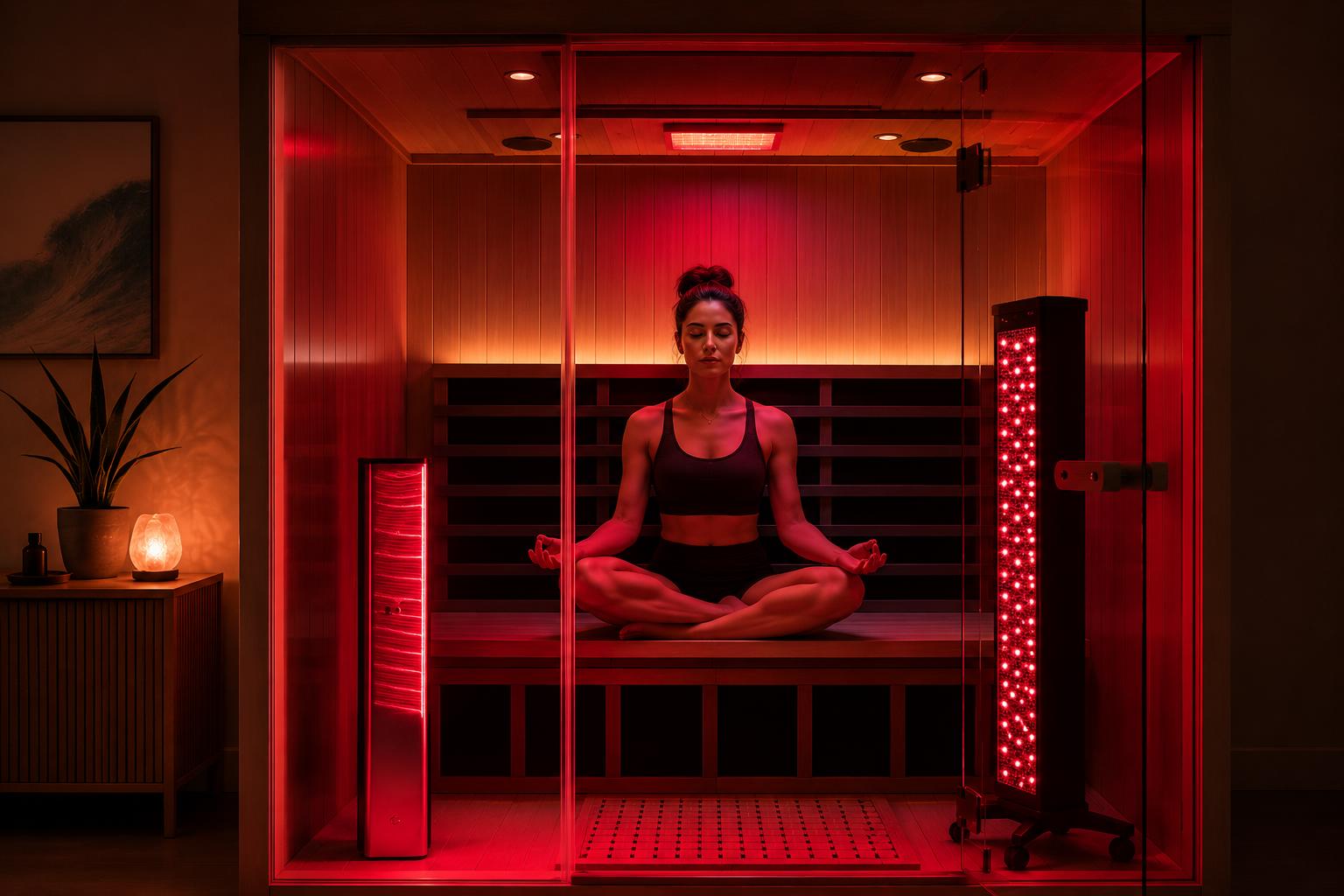
Red light therapy is a passive, non-invasive treatment. You'll typically sit or lie comfortably while the device is positioned near the area being treated. Most people describe the experience as relaxing—there's no pain, no heat sensation (unlike infrared saunas), and no discomfort.
You may notice a gentle warmth from the device, and the red/near-infrared light is visible (though you won't stare directly into it). Some people find the experience meditative, particularly when red light therapy is combined with massage therapy or other wellness modalities.
Treatment Duration and Frequency
Typical red light therapy sessions last 10–20 minutes, depending on the condition being addressed and the specific device being used. Research protocols vary, but many studies showing positive results used treatment frequencies of 2–5 times per week.
For athletic recovery, some protocols recommend treatment immediately after exercise. For skin health and hair growth, consistent treatment over weeks or months appears to be most effective. Your wellness practitioner can recommend a protocol based on your specific goals.
Consistency and Timeline for Results
Red light therapy is not a "quick fix." Results typically develop over time with consistent treatment. For hair growth, studies generally show measurable results after 8–16 weeks of consistent treatment. For skin improvements, visible changes often appear after 4–12 weeks. For muscle recovery, benefits may be noticed more immediately, sometimes within days or weeks.
Consistency is key. Occasional treatments are unlikely to produce significant results. The research suggests that regular, ongoing treatment is necessary to maintain benefits.
Frequently Asked Questions
Does Red Light Therapy Hurt?
No. Red light therapy is non-invasive and painless. There's no sensation beyond gentle warmth from the device. It's safe for all skin types and requires no downtime.
How Often Should I Use Red Light Therapy?
This depends on your goals and the specific protocol. For athletic recovery, 2–5 times per week is common. For skin health and hair growth, 2–3 times per week is typical. Your wellness practitioner can recommend a frequency based on your individual needs. Consistency matters more than intensity.
How Long Before I Notice Results?
This varies by application:
• Muscle recovery: Some people notice reduced soreness within days or weeks
• Skin health: Visible improvements typically appear after 4–12 weeks of consistent treatment
• Hair growth: Measurable results usually appear after 8–16 weeks
Patience and consistency are important. Results develop gradually as your cells adapt to enhanced energy production and collagen remodeling occurs.
Is Red Light Therapy Safe?
Red light therapy is generally considered safe with minimal side effects. It's non-invasive, non-thermal (at therapeutic doses), and doesn't damage skin or tissue. However, certain precautions apply:
• If you're taking medications that increase light sensitivity, consult your healthcare provider first
• Avoid direct eye exposure (though the light itself isn't harmful to eyes at therapeutic distances)
• If you have a history of skin cancer or suspicious skin lesions, consult a dermatologist before use
When used as directed, red light therapy carries minimal risk.
Can Red Light Therapy Be Combined with Massage Therapy?
Absolutely. In fact, red light therapy and massage therapy complement each other beautifully. Massage enhances circulation and releases muscle tension, while red light therapy supports cellular energy and recovery at the mitochondrial level. Many wellness studios, including Beach City Massage & Bodywork, integrate both modalities to create comprehensive recovery and wellness programs.
The combination may be particularly effective for:
• Post-workout recovery
• Chronic muscle tension
• Skin wellness programs
• General relaxation and recovery
Conclusion
Red light therapy—or photobiomodulation—is far more than a wellness trend. It's a modality grounded in cellular biology, supported by peer-reviewed research, and increasingly integrated into professional wellness settings.
The science is clear: red and near-infrared light wavelengths interact with mitochondrial enzymes to enhance cellular energy production. This fundamental mechanism supports a range of wellness applications, from muscle recovery and exercise performance to skin health and hair growth. While not every claimed benefit has equal research support, the evidence base is robust in several key areas.
What makes red light therapy particularly valuable is its versatility and safety profile. It works synergistically with other wellness modalities—particularly massage therapy—to create comprehensive recovery and wellness programs. Whether you're an athlete seeking faster recovery, someone interested in skin health, or simply exploring holistic wellness options, red light therapy offers an evidence-informed approach worth considering.
At Beach City Massage & Bodywork, we believe in combining evidence-based modalities to support your body's natural wellness capacity. Red light therapy, integrated with professional massage, creates a powerful foundation for recovery, relaxation, and long-term wellness. If you're curious about how red light therapy might complement your personal wellness routine, we invite you to explore this modality with our experienced wellness team.
References
Adil, A., & Godwin, M. (2017). The effectiveness of low-level light therapy in hair growth: Part I. Dermatologic Surgery, 43(7), 903–910. https://doi.org/10.1097/DSS.0000000000001107
Avci, P., Gupta, A., Sadasivam, M., Vecchio, D., Pam, Z., Pam, N., & Hamblin, M. R. (2013). Low-level laser (light) therapy (LLLT) in skin: Stimulating, healing, restoring. Seminars in Cutaneous Medicine and Surgery, 32(1), 41–52.
Barolet, D., Christiaens, F., & Hamblin, M. R. (2016). Infrared light emitting diodes: Proven efficacy. Journal of Cosmetic Dermatology, 15(2), 107–116. https://doi.org/10.1111/jocd.12207
Calderhead, R. G., Trelles, M. A., Calderhead, T., & Groves, R. (2007). Photobiomodulation for human wellness and regeneration. In M. R. Hamblin & Y. Y. Huang (Eds.), Handbook of photomedicine (pp. 453–470). CRC Press.
de Freitas, L. F., & Hamblin, M. R. (2016). Proposed mechanisms of photobiomodulation or low-level light therapy. IEEE Journal of Selected Topics in Quantum Electronics, 22(3), 348–364. https://doi.org/10.1109/JSTQE.2016.2561201
Evans, R. D., Awadalla, F., Osman, H., Thiboutot, D., Shalita, A. R., & Eichenfield, L. F. (2021). Low-level laser therapy for hair loss: A systematic review and meta-analysis. Lasers in Surgery and Medicine, 53(8), 1047–1058. https://doi.org/10.1002/lsm.23408
Ferraresi, C., Huang, Y. Y., & Hamblin, M. R. (2015). Photobiomodulation in human muscle tissue: Strength and efficacy. Photochemistry and Photobiology, 92(1), 12–23. https://doi.org/10.1111/php.12549
Glass, G. E., Chan, J. K., Freilich, A. M., Pelletiere, E. V., & Gonzalez, A. M. (2011). Effect of photobiomodulation on wound healing: A systematic review of animal models and human trials. Photomedicine and Laser Surgery, 29(6), 404–411. https://doi.org/10.1089/pho.2010.2866
Hamblin, M. R. (2018). Mechanisms and mitochondrial redox signaling in photobiomodulation. Photochemistry and Photobiology, 94(2), 199–212. https://doi.org/10.1111/php.12864
Jimenez, J. J., Wikramanayake, T. C., Bergfeld, W., Hordinsky, M., Hickman, J. G., Stough, D. B., & Shapiro, J. (2014). Efficacy and safety of a low-level laser device for the treatment of male and female pattern hair loss: A multicenter, randomized, sham device-controlled, double-blind study. American Journal of Clinical Dermatology, 15(2), 115–126. https://doi.org/10.1007/s40257-013-0060-6
Kim, W. S., Calderhead, R. G., Ahn, J. C., Huang, Y. Y., & Hamblin, M. R. (2013). Photobiomodulation with LEDs for androgenetic alopecia: A randomized, placebo-controlled, half-head study. Lasers in Surgery and Medicine, 45(8), 487–495. https://doi.org/10.1002/lsm.22170
Leal-Junior, E. C., Vanin, A. A., Miranda, E. F., de Carvalho, P. D., Dal Corso, S., & Bjordal, J. M. (2015). Effect of photobiomodulation on muscle fatigue, soreness and performance in healthy subjects. Journal of Biophotonics, 8(4), 339–346. https://doi.org/10.1002/jbio.201400087
Lee, S. Y., Park, K. H., Choi, J. W., Kwon, J. K., Lee, D. R., Shin, S. C., ... & Kim, W. S. (2007). A prospective, randomized, placebo-controlled, double-blinded, and split-face clinical study on LED phototherapy for skin rejuvenation. Journal of Photochemistry and Photobiology B: Biology, 86(3), 222–228. https://doi.org/10.1016/j.jphotobiol.2006.09.010
Vanin, A. A., de Marchi, T., Tomazoni, S. S., Tairova, O., Casalechi, H. L., Ferraresi, C., ... & Leal-Junior, E. C. (2016). Pre-exercise photobiomodulation improves acute strength performance in basketball players. Journal of Sports Science & Medicine, 15(3), 438–445.
Wellness Disclaimer
This article is for educational purposes only and should not be construed as medical advice. Red light therapy is a wellness modality intended to support your body's natural functions and complement a healthy lifestyle. It is not intended to diagnose, treat, cure, or prevent any disease or medical condition.
If you have a medical condition, are taking medications, or have concerns about your health, please consult with a qualified healthcare provider before beginning any new wellness treatment. Results vary by individual and depend on consistent use and proper application.
Beach City Massage & Bodywork provides wellness services and education. Our practitioners are not physicians and do not provide medical diagnosis or treatment.